
From Hundreds of Excel Sheets to an AI-Powered Construction SaaS
A UK construction group owner was managing £40-60M worth of projects across spreadsheets and email chains. No system. No structure. Just years of accumulated complexity held together by institutional knowledge. We built the platform that replaced all of it - and it's now launching as a commercial SaaS product.
Why UK Construction Companies Still Run on Excel
Our client owns two commercial construction companies and a consultation firm in the UK. Between them, they manage hundreds of active and historical projects - NEC contracts, resource schedules, kick-off meetings, compliance notices, subcontractor relationships, and reporting chains that span months.
All of it lived in Excel. Hundreds of sheets. Cross-referenced manually. Updated inconsistently. Stored across inboxes and shared drives with no single source of truth.
The problems weren't abstract. NEC compliance required reading through entire email chains to find the latest version of a document referencing a specific topic. Checking for scheduling conflicts meant sifting through sheets made months in advance - and conflicts still slipped through due to spelling differences and minor discrepancies between entries. Every answer required someone who already knew where to look.
He came to Esseal with his spreadsheets, walked us through his workflows, and asked us to build something better. Esseal proposed and led the entire custom product development and internal tools dashboard engineering process from that point forward.
Built-In AI That Knows Your Projects
The platform's AI layer is what separates it from off-the-shelf construction software. Rather than generic recommendations, the AI is localised to each project's own data - it learns from the patterns already present in the platform and applies that context directly.
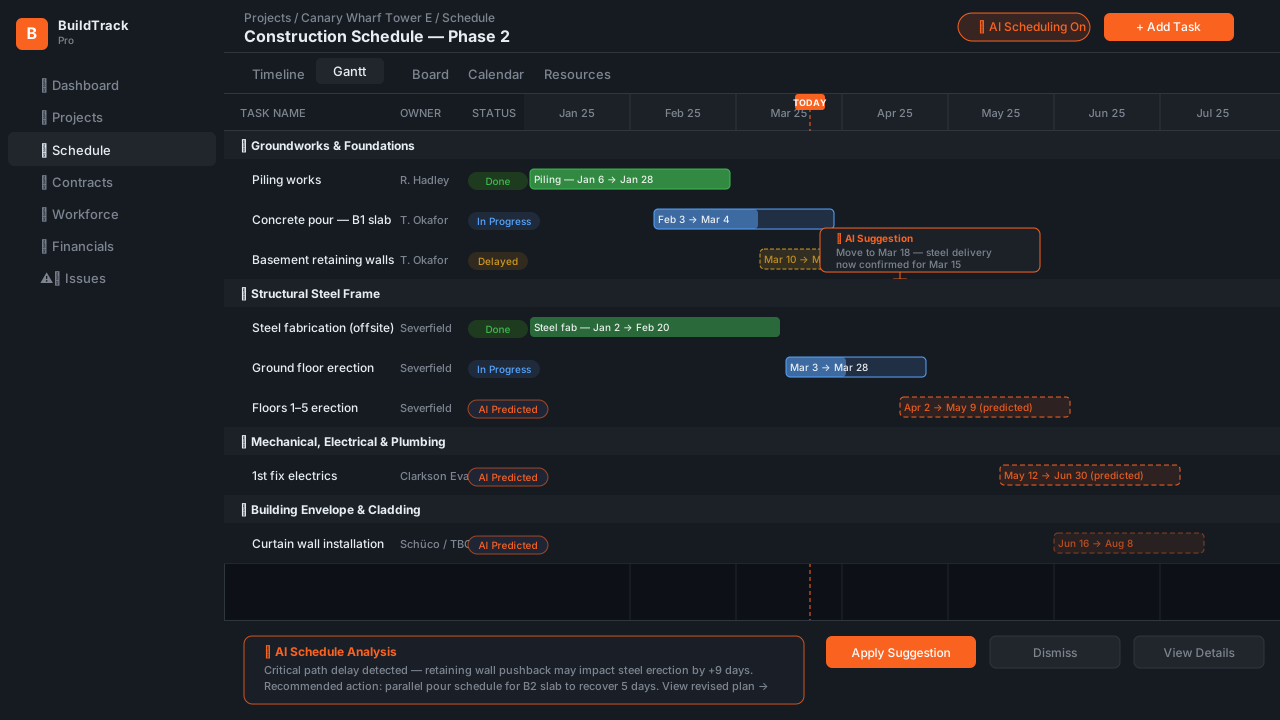
- Scheduling suggestions: The AI analyses current resource allocation, project timelines, and historical patterns to recommend optimal scheduling windows - flagging conflicts before they're confirmed.
- Pricing intelligence: Estimation quotes are AI-assisted, drawing on project data to surface relevant cost considerations and flag anomalies against comparable past work.
- Event prediction: The system predicts future events - resource bottlenecks, deadline risks, compliance notice deadlines - based on how the project is currently tracking. Problems are surfaced before they become incidents.
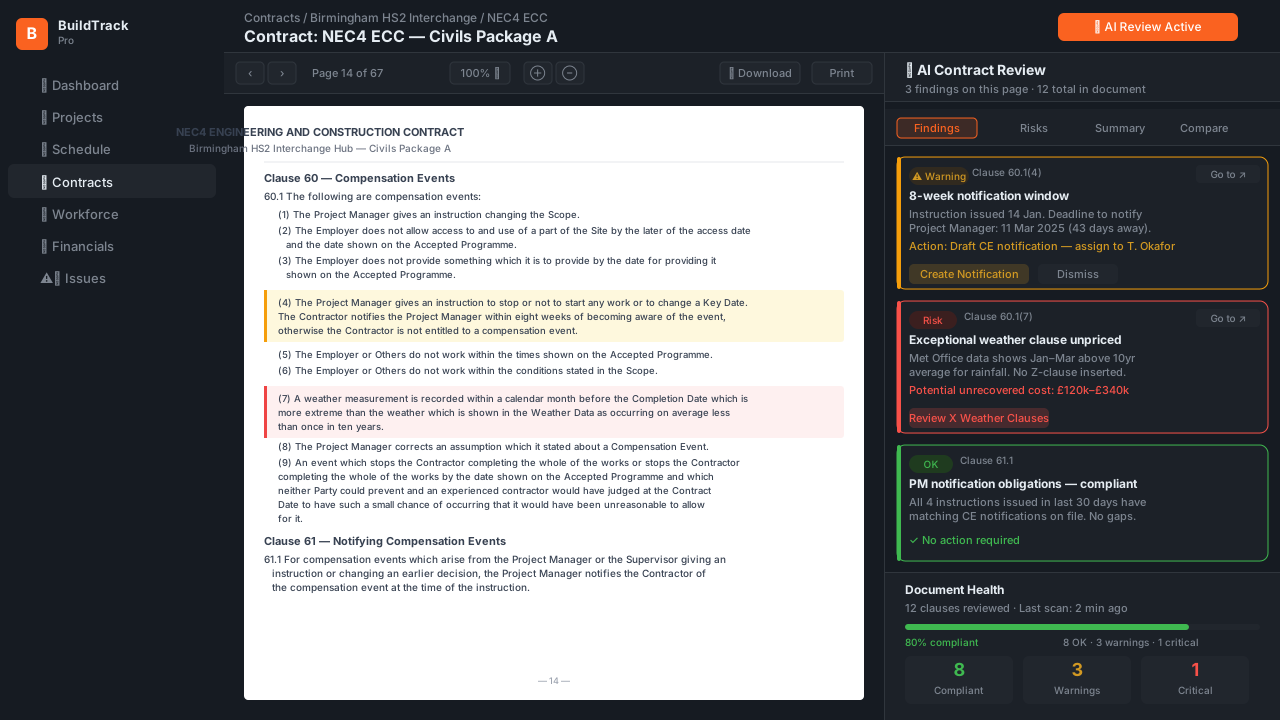
- NEC contract creation: AI assists in drafting NEC contract documents, pulling from project context to reduce manual drafting time and ensure compliance with contractual obligations.
Custom Construction Management Software - What We Delivered
A full monorepo - four dashboards, one backend, shared component library.
Manager Dashboard
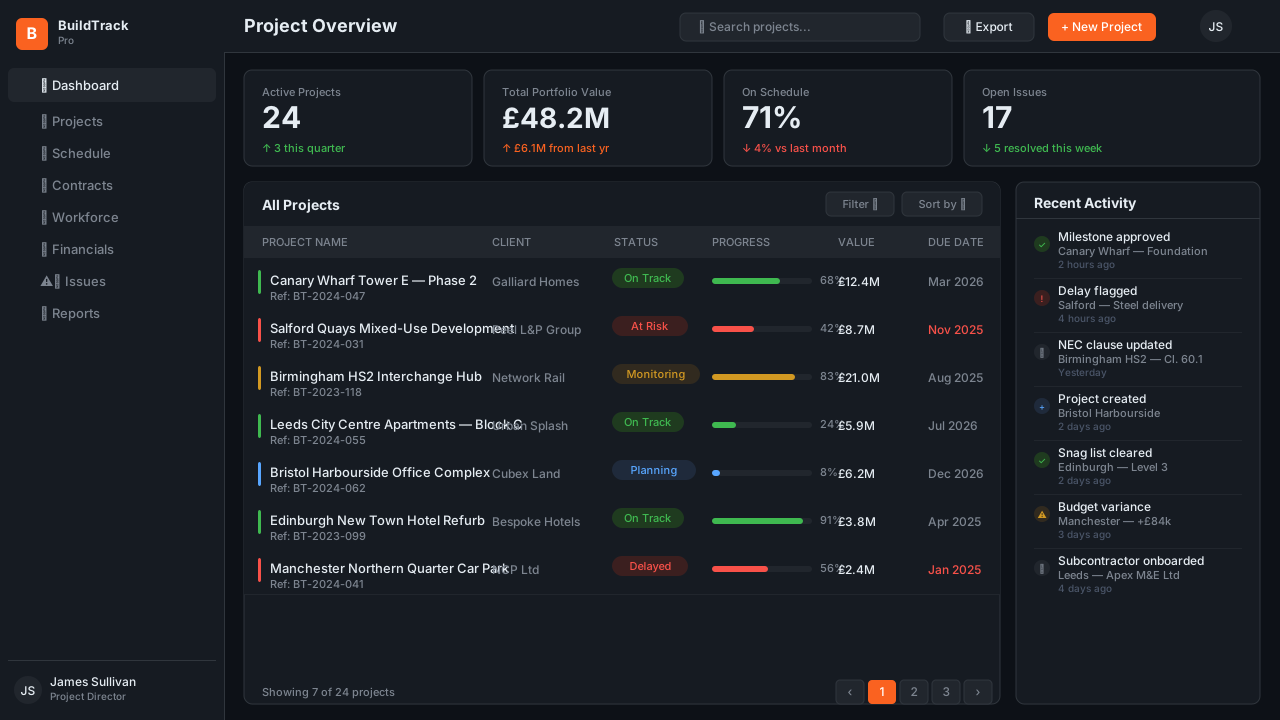
The core of the platform. Project creation and tracking, NEC notice management, kick-off workflows, document storage, and full audit trails. Everything a project manager needs in one place - with real-time updates via WebSockets so the view is always current.
Scheduler Dashboard
Resource scheduling across personnel, equipment, and subcontractors. Conflict detection that actually works - no spelling mismatches, no missed entries. The AI layer surfaces scheduling suggestions and flags future conflicts before they're locked in.
Reports Dashboard
Analytics and reporting across the entire project portfolio. Progress tracking, financial summaries, compliance status, and exportable reports - designed to give both site managers and company owners exactly the view they need without navigating away.
Building Bespoke Construction Software - The Hard Parts
Two challenges that required more than just engineering.
Translating Human Systems into Software
The client's entire operation ran on a mix of spreadsheets, mental models, and institutional knowledge built over years. There was no spec to work from - just a stack of Excel files and a set of pain points. Esseal's job was to extract the logic embedded in those workflows, identify what the software actually needed to do, and design a system that matched how the business already thought. That translation process - from human system to product - was the longest and most critical phase of the engagement.
Radical Simplicity for a Non-Technical User Base
The client's instruction was clear: if it's confusing, no one will use it. The end users - site managers, tradespeople, project coordinators - are not software professionals. Every screen had to be immediately intuitive. No onboarding flow, no tutorial, no manual. The platform is built on a 160+ type GraphQL schema with hundreds of mutations and queries, but none of that complexity is visible to the person using it. That gap between backend depth and frontend simplicity was deliberate and hard-won.
Results: A £40M Construction Portfolio, Off Excel for Good
The platform is live across all three of the client's companies. It currently manages over 700 commercial construction projects - 68 active, with the remainder backfilled from prior years - representing £40-60M in portfolio value.
The Excel sheets are gone. NEC compliance is tracked automatically. Scheduling conflicts are caught before they're made. The AI surfaces risks and suggestions that previously required someone to already know where to look.
Esseal's engagement covers the full product lifecycle - full-stack development, DevOps, QA, and ongoing maintenance. It remains our longest-running client relationship. A bespoke solution, built by a London-based software development agency with deep experience in data-heavy, multi-role SaaS platforms.
In Q4 2026, the platform launches as a standalone commercial SaaS product - opening up to the wider UK construction industry. What started as one owner's internal tool became a product with a market.
Frequently Asked Questions
Can you build custom construction management software from scratch?
Yes - this case study is a live example. Esseal built a full AI-powered construction management SaaS from scratch, covering project management, NEC contract compliance, AI-assisted scheduling, resource planning, and reporting. The platform is live across three companies managing over 700 projects and £40-60M in active work.
How does AI improve construction project management?
In this platform, localised AI analyses each project's own data to suggest optimal scheduling windows, flag pricing risks, and predict future events such as resource conflicts or deadline slippage - before they happen. AI also assists with NEC contract creation and estimation quotes, reducing manual effort and human error at every stage.
What is NEC contract management software?
NEC (New Engineering Contract) is the standard contract framework used across UK commercial construction. Managing NEC compliance traditionally requires reading through long email chains and manually tracking document versions. This platform automates NEC notice tracking, stores full audit trails, and uses AI to assist with contract creation - eliminating the manual overhead entirely.
How do you build software for non-technical users in construction?
The client's guiding principle was: if it's confusing, no one will use it. Every screen was designed for a low-tech user base - tradespeople and site managers, not software professionals. Esseal translated complex Excel and email-based workflows into a system that's immediately intuitive with no training required. The complexity lives in the backend; the surface is clean and direct.
Need Bespoke Software for a Complex Industry?
We've built production SaaS platforms in construction, events, healthcare, and logistics. If your business still runs on Excel and email, let's talk.