
Custom Shopify Theme Development for Lokelani Essentials
Lokelani Essentials is a US-market natural skincare brand built around agroforestry and syntropic farming. When they came to Esseal, they were new to Shopify and running into a hard technical wall - too many product variants for the platform to handle natively. We built a custom theme that solved both problems.
When Shopify's Default Limits Don't Fit Your Product Catalogue
Lokelani Essentials sells natural, plant-based skincare products rooted in Hawaiian agroforestry and syntropic farming practices. Their product range - spanning multiple sizes, formulations, bundles, and B2B wholesale options - ran directly into Shopify's native variant limit.
Shopify limits each product to 100 variants across up to three option types. For brands with complex catalogues, this creates a real structural problem: products either need to be split across multiple listings in ways that break the customer experience, or the product range has to be artificially simplified. Neither option is acceptable.
The client was also new to Shopify entirely - unfamiliar with how to configure their store for their specific use case, and needing a frontend development partner who could navigate both the technical constraints and the brand requirements simultaneously.
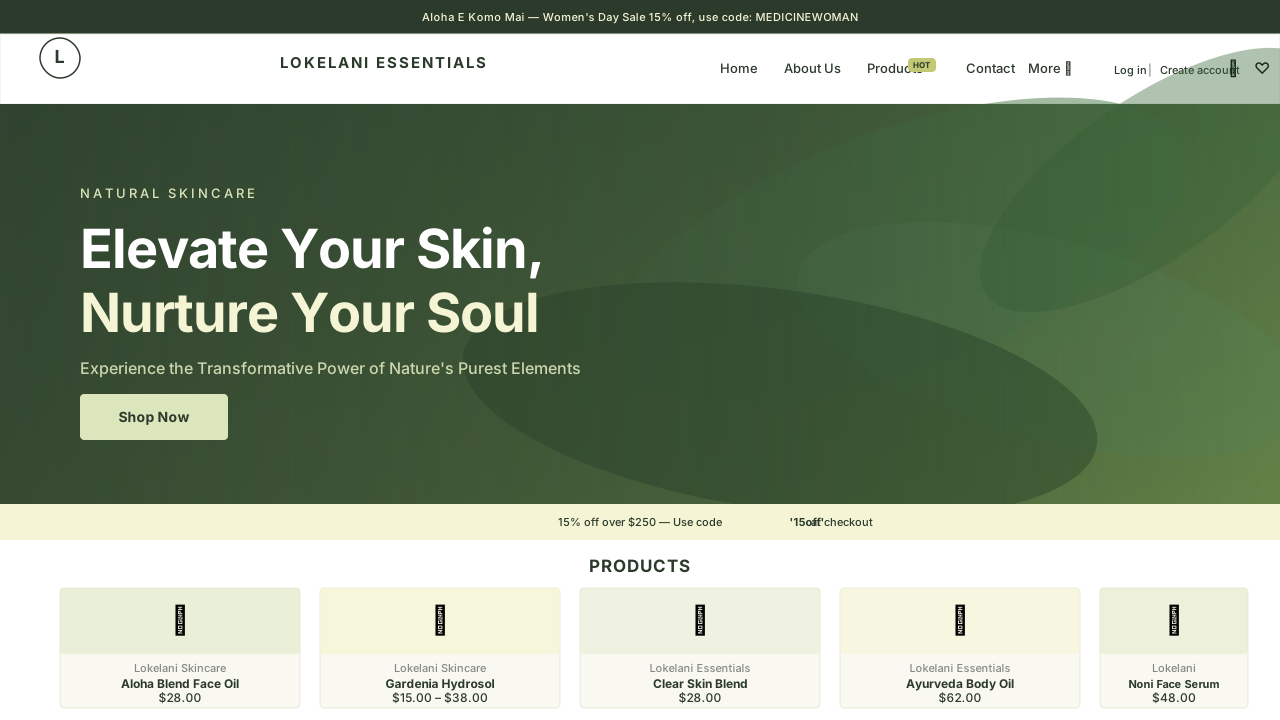
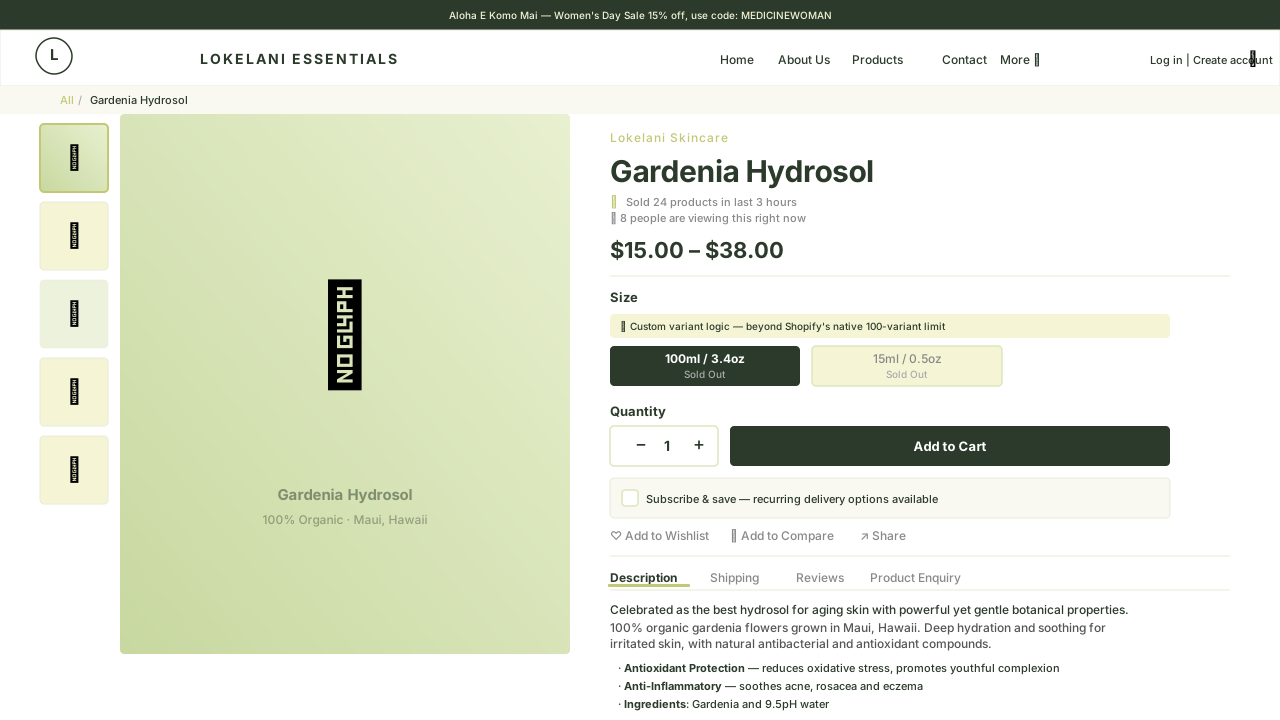
A Bespoke Shopify Theme Built Around the Brand - Not the Template
Esseal built a fully custom Shopify theme from scratch - designed around Lokelani Essentials' brand identity, product catalogue structure, and customer journey. No off-the-shelf template constraints. No compromise on the product range.
The variant limit issue was resolved through custom theme-level logic that extends product variant handling beyond Shopify's native limits - while preserving all native Shopify functionality: checkout, inventory tracking, fulfilment, and existing app integrations including the loyalty program, referral system, wishlist, and gift cards.
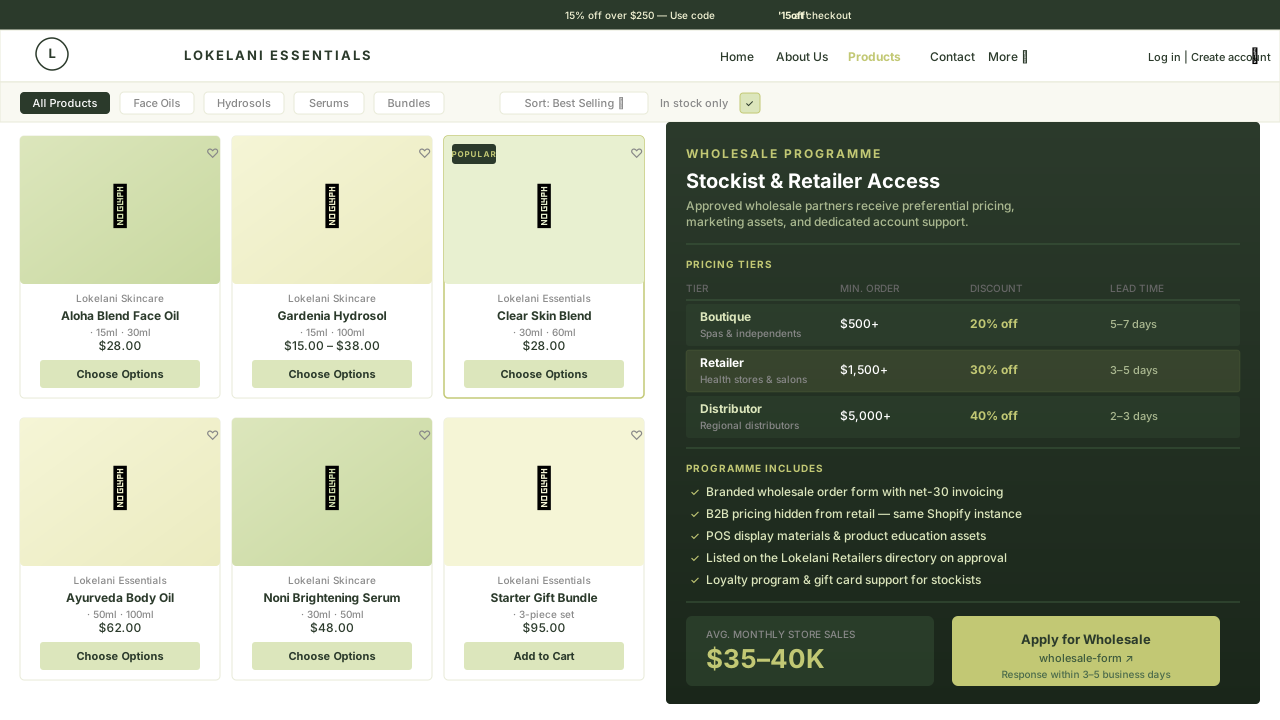
The store supports both direct-to-consumer retail and B2B wholesale operations within the same Shopify instance - structured to handle different pricing, ordering, and fulfilment flows for each channel without requiring a separate storefront.
Results: $35-40k Monthly Sales and a Functioning Growth Engine
Esseal handled the full frontend build. SEO and marketing for the store were managed by TriSoul Digital - a specialist digital marketing agency Esseal collaborated with throughout the project. The two workstreams were coordinated to ensure the technical implementation supported the marketing strategy from day one.
Lokelani Essentials now averages $35-40k in monthly sales. The custom theme handles their full product range without workarounds, the B2B wholesale operation runs alongside retail seamlessly, and the store is built on a foundation that scales as the brand grows.
Frequently Asked Questions
Can you build a custom Shopify theme from scratch?
Yes. Esseal builds fully custom Shopify themes tailored to a brand's specific product catalogue, customer journey, and design requirements. Unlike off-the-shelf themes, a custom theme gives you full control over structure, performance, and user experience - with no template constraints.
How do you work around Shopify's product variant limit?
Shopify limits products to 100 variants across 3 options. For brands with complex catalogues, this creates real problems. Esseal solves this through custom theme-level logic or Shopify app development that extends variant handling beyond native limits - without losing Shopify's native checkout, inventory, or fulfilment integrations.
Can you build a Shopify store that supports both retail and wholesale?
Yes. Esseal can configure a single Shopify instance to handle direct-to-consumer retail and B2B wholesale within the same storefront - with separate pricing, ordering flows, and fulfilment logic for each channel. No need for a separate wholesale platform or manual price list management.
Need a Custom Shopify Theme That Actually Fits Your Products?
Off-the-shelf themes make compromises your brand shouldn't have to make. Our frontend engineers build Shopify stores designed around your catalogue - not around the template.