
Senior Engineers Who Drop In With Zero Onboarding
A well-established US amateur motorsports organisation runs its own in-house engineering team. When their workload exceeds capacity - event registration surges, roadmap sprints, or backend infrastructure work - they call Esseal. No handholding. No documentation walkthroughs. Just senior engineers who move like they already know the system.
When Your In-House Team Is Great - But Not Big Enough
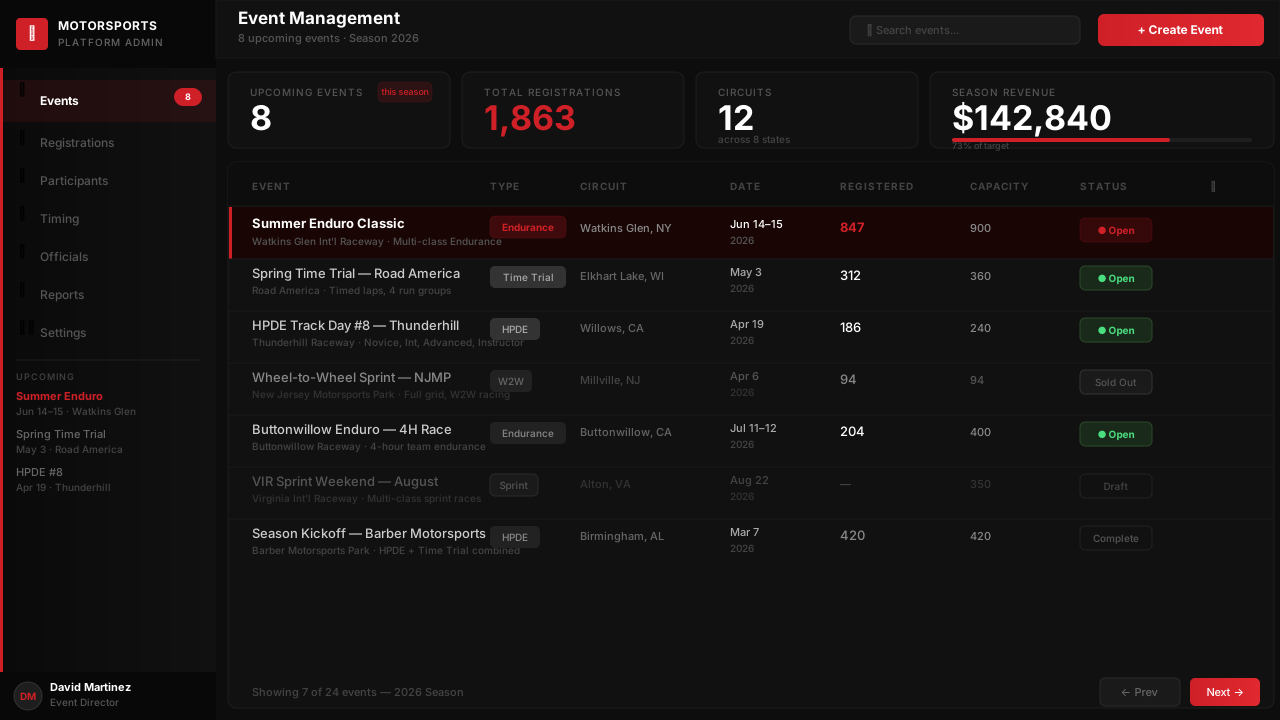
Our client is a well-established US amateur motorsports organisation that has been running events across the country for over three decades - from beginner track days and time trials through to wheel-to-wheel road racing and endurance competitions at iconic circuits.
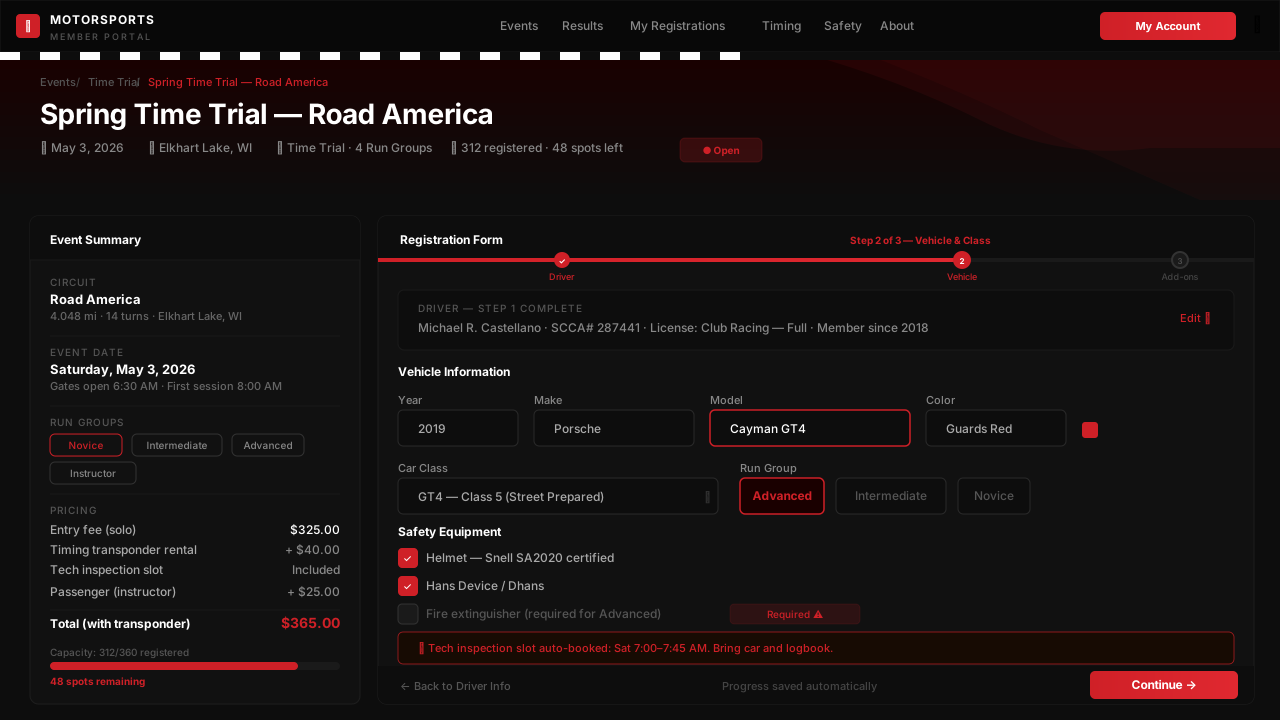
The organisation runs its own in-house development team, which built and maintains the full platform behind the business: event management, registration systems, ticketing, organiser panels, and administrative tooling. The team is capable. The problem is simply that engineering roadmaps don't respect team size - and there are periods where the backlog outpaces what an in-house team can absorb.
The client's concern when engaging Esseal was understandable: how do you bring in external engineers on a platform they've never touched and expect them to contribute meaningfully without taking more time to onboard than they save?
How Senior Engineers Integrate Into Existing Teams Without Overhead
The value of experience isn't just what you build - it's how fast you understand what's already there.
Read First, Build Second
Before writing a line of code in an unfamiliar codebase, Esseal engineers map the architecture - understanding how the system is structured, where the business logic lives, and how the components connect. This isn't done in a kickoff meeting. It's done by reading the code. Senior engineers do this in hours, not days.
Matching Existing Conventions
Every codebase has conventions - naming patterns, architectural decisions, team preferences that aren't written anywhere. Esseal engineers identify and match these patterns from the start, so every contribution looks like it was written by the team that owns the codebase. No stylistic friction. No technical debt introduced through inconsistency.
Effective from Day One
The client's feedback: no handholding was needed at any point. Esseal engineers moved through the codebase like they already knew where everything was and how it connected. That's not a claim - it's the result of only sending senior engineers who have seen enough production codebases to navigate an unfamiliar one fast.
What Overflow Engineering Support Actually Looks Like
The client's description of working with Esseal: it felt like having an extension of his own team. The concern that external engineers would need constant context and handholding never materialised. When Esseal drops into the codebase, they move.
This engagement is ongoing - activated when the in-house team's workload peaks and stood down when capacity normalises. No minimum retainer during quiet periods. No ramp-up lag when things get busy again.
For organisations that have a functioning in-house team but periodically need more full-stack development capacity than they can hire for, this model works better than agency contracts and is faster to activate than a new hire.
Frequently Asked Questions
Can Esseal provide overflow engineering support for an existing in-house team?
Yes. Esseal offers on-demand overflow engineering capacity - stepping in when an in-house team's workload exceeds bandwidth. Our senior engineers integrate directly into existing workflows and codebases without requiring onboarding sessions or handholding. We navigate unfamiliar systems the same way we navigate our own.
How quickly can Esseal get up to speed on an existing codebase?
Fast. The value of senior engineers over junior developers is precisely this: reading, understanding, and contributing to an unfamiliar codebase without needing context fed to you. For this client, the feedback was that no handholding was needed at any point - Esseal moved like they already knew where everything was.
What is the difference between overflow support and a retainer?
A retainer is an ongoing monthly commitment. Overflow support is project-by-project - Esseal engages when the client needs additional capacity and steps back when the in-house team can handle the workload. There's no requirement to maintain minimum spend during quieter periods.
In-House Team at Capacity? We Can Help.
Senior engineers available on demand - no ramp-up lag, no onboarding overhead. We integrate into your existing codebase and deliver from day one.